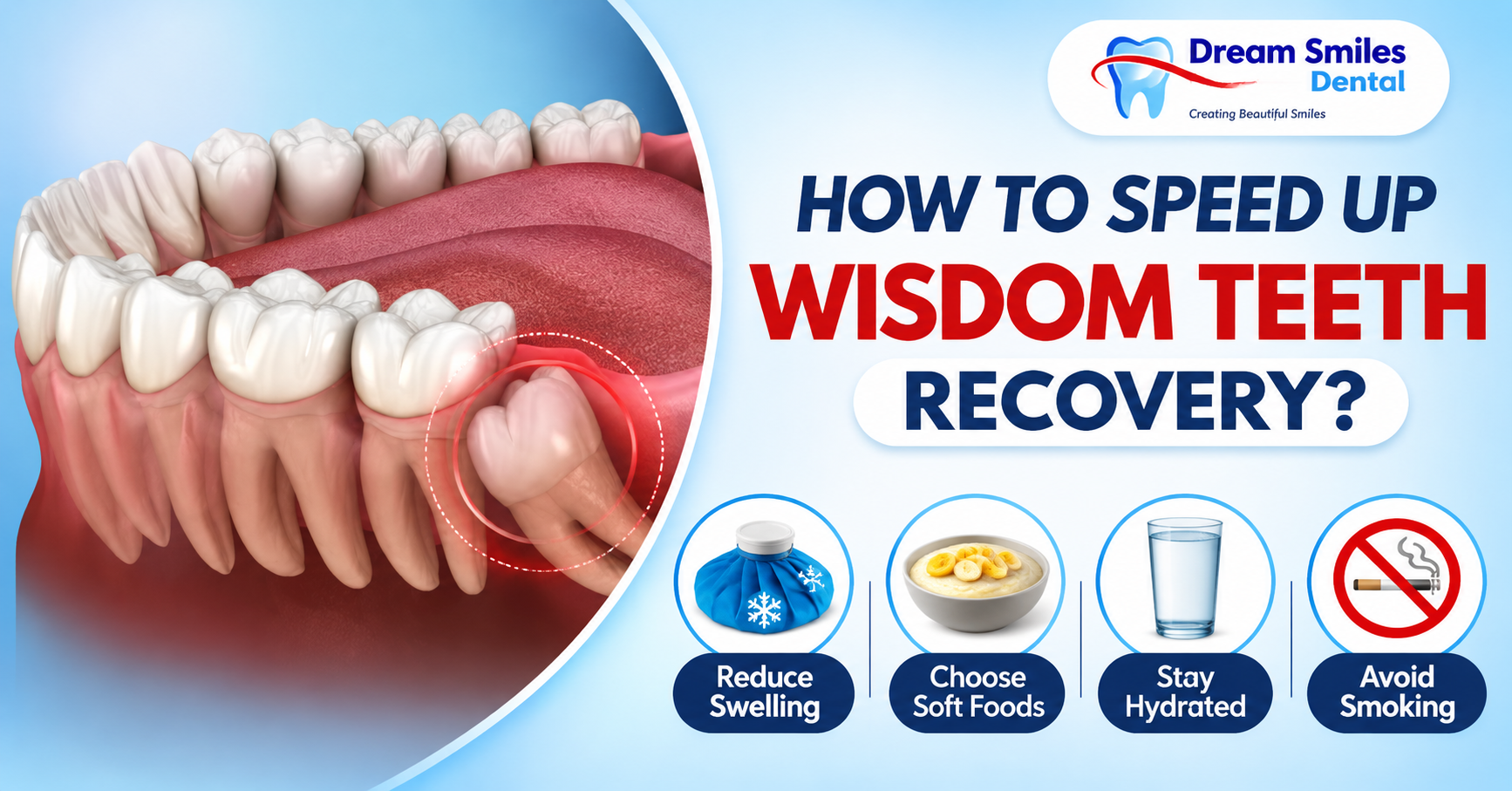
Wisdom teeth removal is an experience that most people go through in life, and while the procedure is common, the time after it can be annoying. There will be pain, swelling, jaw stiffness, nausea, and hopefully, you will be able to minimise these effects and prevent more problems with the right wisdom teeth removal aftercare. Dream Smiles Dental explains what you must know about wisdom teeth removal recovery, the type of food you should eat, and what to expect after your wisdom teeth have been removed.
How Long Does Wisdom Teeth Removal Take to Heal?
The recovery period following the removal of wisdom teeth will vary from person to person. It will depend on the position of the wisdom tooth or teeth, how complex the procedure was, and the condition of your teeth. Most patients notice improvement considerably within 3-7 days, but complete gum healing may take several weeks, and the tooth socket and underlying bone can take up to several months to heal.
Wisdom Teeth Recovery Timeline: What to Expect
The better you understand the wisdom teeth recovery timeline, the more you will know what to expect following your surgery.
- Initial 24 hours: Mild bleeding, tenderness, and swelling might be expected. A blood clot develops in the extraction site and is an important part of the healing process.
- Days 2-3: Swelling and jaw stiffness may get worse and are usually at their maximum peak (48-72hours).
- Days 4-7: The swelling and pain should subside gradually. You should be able to gradually resume your normal activities.
- Week 2: The majority of patients feel much better, with tenderness remaining.
The gum tissue begins to heal and the patient starts to notice relief around the tooth removal location. Please remember that your recovery from wisdom tooth removal may be different from person to person.
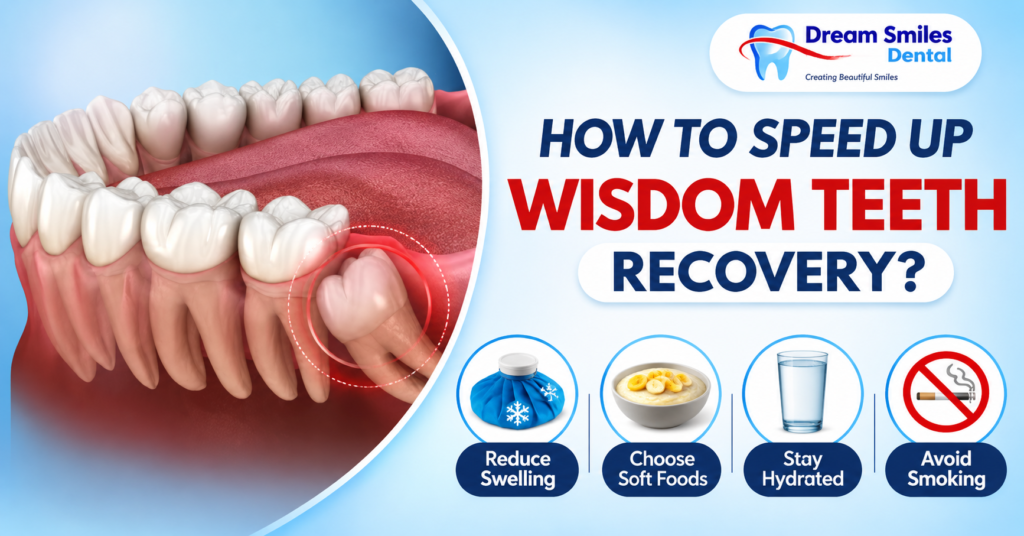
6 Tips on How to Speed Up Wisdom Teeth Recovery
Follow these easy aftercare tips to help you recover faster and avoid unnecessary pain.
1. Use an Ice Pack to Minimise Swelling
It is normal for many people to experience swelling on the face after wisdom teeth removal. Dentists may recommend that you use an ice pack on the outside of your cheek, 15-20 minutes on and off, for the first 24 hours following your appointment. The dentist might advise warm packs after the first 24-48 hours of the operation in order to relieve jaw stiffness.
2. Eat Soft and Nutritious Foods
To help your body heal, you’ll need to eat the right foods. Opt for foods that are easy to chew, including:
- Mashed potatoes and scrambled eggs.
- Yoghurt and smoothies eaten with a spoon.
- Soft pasta and lukewarm soups.
- Mashed bananas and avocado.
- Do not eat hard, crunchy, spicy and very hot foods until the healing of your extraction site.
3. Avoid Excessive Physical Activity
Rest during the first few days following your dental implant procedure. Do not engage in any strenuous exercise for 48-72 hours unless approved by your dentist. Moving too much can lead to excessive bleeding and discomfort.
4. Maintain Oral Hygiene
Don’t brush the socket of the tooth for the first few days after the operation. After the first 24 hours, rinse with warm salt water, especially after eating. Do not rinse aggressively, as this may dislodge the blood clot.
5. Follow Your Prescribed Medication Schedule
Ask your dentist for any medication that has been prescribed or suggested for you to take for pain. Take a medication prescribed to you for pain relief.
Never use antibiotics, unless you’ve been given by a dentist. If you live in or near North Rocks and you’re seeking guidance on what to do if the pain continues despite being prescribed medication, you can contact our dentist North Rocks.
6. Don’t Smoke or Drink through a Straw
Smoking and vaping can impede healing and lead to dry socket. Please refrain from smoking or vaping during this time. Refrain from using a straw for at least 24-48 hours after the injection, or longer if recommended by your dentist. The sucking action from using a straw can loosen the blood clot and delay healing. You can learn more about dry socket by reading our previous blog on: What is Dry Socket After Tooth Removal?
How Long After Wisdom Teeth Removal Can I Eat?
Once you no longer have the numbness from local anaesthesia and feel comfortable enough to chew, you will usually be able to eat soft foods. During the first 24 hours, choose foods that are cool or at room temperature, soft and easy to chew. As you begin to feel more comfortable, you can add solid foods. Stay away from nuts, chips, seeds, popcorn and anything that may get caught in your gums.
Wisdom Teeth Removal Swelling: When Should You Be Concerned?
Swelling after wisdom teeth extraction is a standard part of the healing process. It is typically at its highest point 48-72 hours before slowly going down. Call your dentist if swelling gets worse after the third day, becomes more painful, and/or if there is fever, pus, and bad taste.
Frequently Asked Questions
1. How long does wisdom teeth removal take to heal completely?
The majority of patients resolve the initial area of pain/discomfort within 7-14 days. Complete healing of the extraction site, with associated bone, may take several weeks to months.
2. Is swelling normal after wisdom tooth extraction?
Yes. Mild to moderate swelling is usual, mainly in the first three days, then it should lessen.
3. Can I brush my teeth after wisdom teeth removal?
Yes. In most cases, you’ll be able to brush all your other teeth gently on the day of your surgery, staying clear of the extraction area. Clean the area around the site gently when you get home.
Final Thoughts
Recovery from wisdom teeth removal doesn’t need to be painful. Rest, gentle cleaning of the area where the teeth were removed, and following your dentist’s aftercare instructions can all help you to recover more easily. For professional advice and personalised dental solutions, contact dentist Carlingford at Dream Smiles Dental.